
What Is CBD?
Updated
You will find CBD in oils, gummies, capsules, skincare, drinks and pet products, often on the same wellness-shop shelves. The labels can leave basic questions unanswered: what does CBD do, how does it differ from THC, and which claims have evidence behind them? Those questions are worth settling before comparing products.
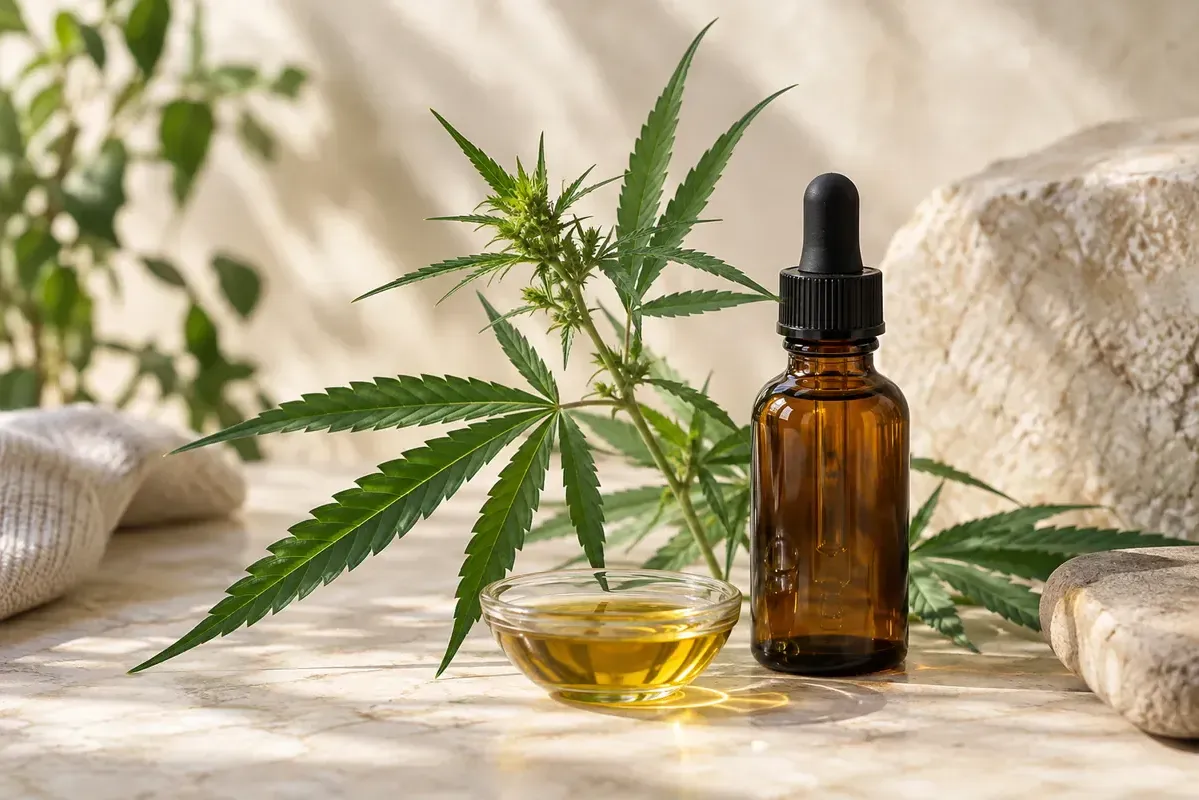
Illustration of hemp and an extract format; not a tested product or evidence of medical benefits.
Quick answer / TL;DR
CBD, short for cannabidiol, is a naturally occurring compound found in cannabis plants, including hemp. CBD is not impairing, meaning it does not cause the "high" associated with THC. Hemp-derived CBD is widely sold in the United States, but product quality, legality, safety, and labeling can vary. CDC
| CBD basics | What to know |
|---|---|
| Full name | Cannabidiol |
| Source | Cannabis, often hemp |
| Intoxicating? | CBD itself is not impairing |
| Same as THC? | No |
| FDA-approved? | One prescription CBD drug is FDA-approved; most retail CBD products are not |
| Main product types | Oils, gummies, capsules, topicals, cosmetics |
| Biggest buyer priority | Third-party lab testing and clear CBD per serving |
For a first purchase, look for clear labeling and lab tests, use a low serving and avoid disease claims. If you take medication or have health concerns, talk with a healthcare professional.
Cannabidiol explained
Cannabidiol is one of many biologically active compounds in the cannabis plant. Cannabis contains cannabinoids, terpenes, flavonoids, fatty acids, and other plant compounds. CBD is most associated with non-intoxicating hemp wellness products.
CBD can come from hemp or non-hemp cannabis. In U.S. federal law, hemp has historically been defined as Cannabis sativa L. and its derivatives with no more than 0.3% delta-9 THC on a dry weight basis. The 2018 Farm Bill removed hemp from the federal Controlled Substances Act definition of marijuana but preserved FDA authority over hemp products. FDA
The source and THC level help determine the legal status. A hemp-derived label alone does not establish approval, safety or legality for every product format.
CBD vs THC
CBD and THC are different cannabinoids. THC is the compound most associated with the intoxicating high from marijuana. CBD itself is not impairing.
| Factor | CBD | THC |
|---|---|---|
| Full name | Cannabidiol | Tetrahydrocannabinol |
| Intoxicating high | No | Yes |
| Common source | Hemp-derived products | Marijuana and some hemp-derived products |
| Drug testing concern | Usually indirect | Direct concern |
| Legal status | Depends on source, THC content, product type, and state law | More restricted federally when above hemp limits |
| Product overlap | Oils, gummies, capsules, topicals | Edibles, flower, vapes, oils, beverages |
A CBD product can still contain THC, especially if it is full spectrum. Check a recent lab report if you face drug testing, are sensitive to THC or plan to travel with it.
How CBD works
CBD interacts with the body's endocannabinoid system, a signaling network involved in many normal functions. Unlike THC, CBD does not primarily work by strongly activating the same receptors that produce intoxication. Its effects appear more indirect and complex, and scientists are still learning how CBD affects the body. CDC
Similar CBD amounts can feel different in a gummy, oil, capsule or topical. Format and serving size affect the experience, as do body chemistry, medications, food timing, extract type and consistency.
CBD effects and potential benefits
Broad marketing claims can obscure how much the evidence varies. The strongest FDA-approved use is a prescription CBD medicine for specific seizure disorders. Retail products are not proven treatments for anxiety, pain, sleep disorders or other conditions. FDA
People commonly explore CBD for:
- General relaxation routines
- Sleep wind-down support
- Exercise recovery routines
- Everyday stress management
- Topical self-care
- Interest in hemp compounds without intoxication
"May support a routine" does not establish that a product treats a disease. NIH's NCCIH says research on cannabis and cannabinoids is ongoing and advises against using them to postpone medical care. NCCIH
Common CBD products
| Product type | How it is used | Best for | Watch for |
|---|---|---|---|
| CBD oil/tincture | Measured by dropper | Flexible serving control | Hemp taste, dropper accuracy |
| CBD gummies | Pre-measured edible | Convenience and taste | Sugar, delayed digestion, child-safe storage |
| CBD capsules/softgels | Swallowed serving | Repeatable routine | Less serving flexibility |
| CBD topicals | Applied to skin | Localized self-care | Not the same as oral CBD |
| CBD cosmetics | Skincare format | Beauty routines | Marketing claims and ingredient quality |
| CBD vapes | Inhaled | Fast onset | Lung and quality concerns |
Oils, gummies and capsules are usually easier for beginners to compare than specialty formats. Inhalation brings separate safety concerns, so vapes warrant extra caution.
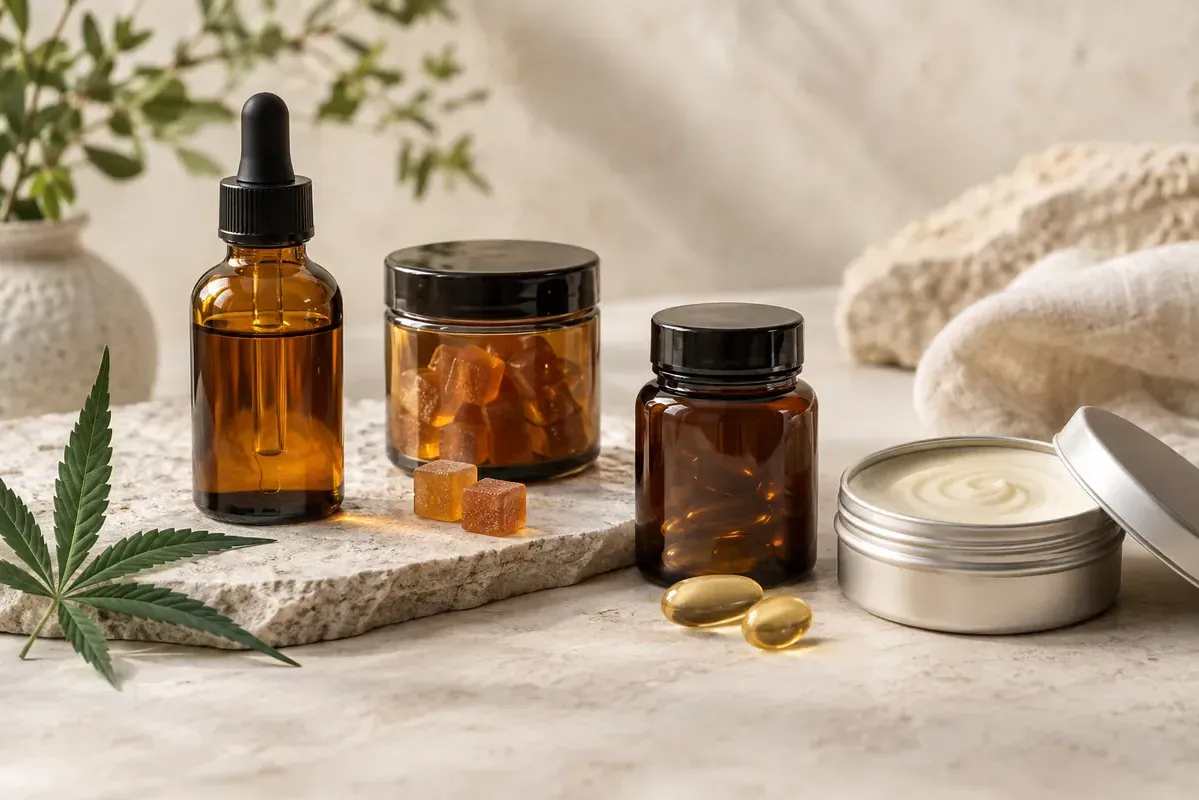
Illustrative product formats, without claims about potency or effectiveness.
CBD spectrum types
CBD products also differ by extract type:
- Full spectrum CBD: CBD plus minor cannabinoids, terpenes, and trace THC.
- Broad spectrum CBD: CBD plus other hemp compounds, typically with THC removed or non-detectable.
- CBD isolate: CBD only, with other hemp compounds removed.
People interested in the "entourage effect," or how cannabinoids and terpenes may work together, often look at full spectrum. Broad spectrum appeals to shoppers who want a wider hemp profile with less THC exposure. Isolate offers CBD alone.
Is CBD safe?
CBD is not risk-free. CDC notes possible risks and side effects such as drowsiness, diarrhea or appetite changes, mood changes, liver concerns, drug interactions, and the risk of products containing THC or contaminants. CDC
The FDA has also warned that CBD can cause liver injury, affect how other drugs work, and increase sedation when combined with alcohol or other substances that slow brain activity. The agency says most retail CBD products have not been evaluated for proper dosage, interactions, side effects, or safety concerns. FDA
Use extra caution if you:
- Take prescription or over-the-counter medication
- Have liver concerns
- Are pregnant, breastfeeding, or trying to conceive
- Must pass drug testing
- Use alcohol, sleep aids, or sedating supplements
- Are buying gummies or edibles that could be mistaken for candy
CBD legality
CBD legality depends on its source, THC content, product type, FDA rules, and state law. Hemp-derived CBD has a different federal status than marijuana-derived cannabis products, but legal CBD products still need to comply with applicable rules.
When checking legality, remember:
- Hemp-derived CBD is tied to hemp THC limits.
- State laws vary.
- FDA says CBD cannot lawfully be added to food or marketed as a dietary supplement.
- Full spectrum CBD may contain trace THC.
- Travel rules can differ by state, airport, and country.
- Product claims can create regulatory risk.
For work or travel concerns, look for batch-specific lab reports and avoid products with unclear labels or high THC content.
Beginner guide to CBD
For a first purchase, a simple product makes the label and serving amount easier to follow.
- Choose a reputable brand with recent third-party lab reports.
- Pick a product type you can use consistently.
- Start with a low serving.
- Use the same serving at the same time for several days.
- Track sleep, mood, alertness, digestion, and unwanted effects.
- Increase only gradually if needed.
- Stop or reduce if you feel too sleepy, foggy, or uncomfortable.
Avoid starting with a high potency product, a complex sleep blend, or a full spectrum product if THC exposure worries you.
Buyer checklist
Before buying CBD products, check:
- Compare CBD per serving as well as the total package size.
- Read the lab report for CBD, THC and contaminant results.
- Confirm the spectrum: full spectrum, broad spectrum or isolate.
- Read the ingredients for allergens, melatonin, herbs, sugar and artificial colors.
- Pay particular attention to THC in full spectrum products.
- Look for clear labels, batch numbers and a way to contact the brand.
- Avoid products promising to cure or treat disease.
- Divide the price by total CBD milligrams to compare cost per mg.
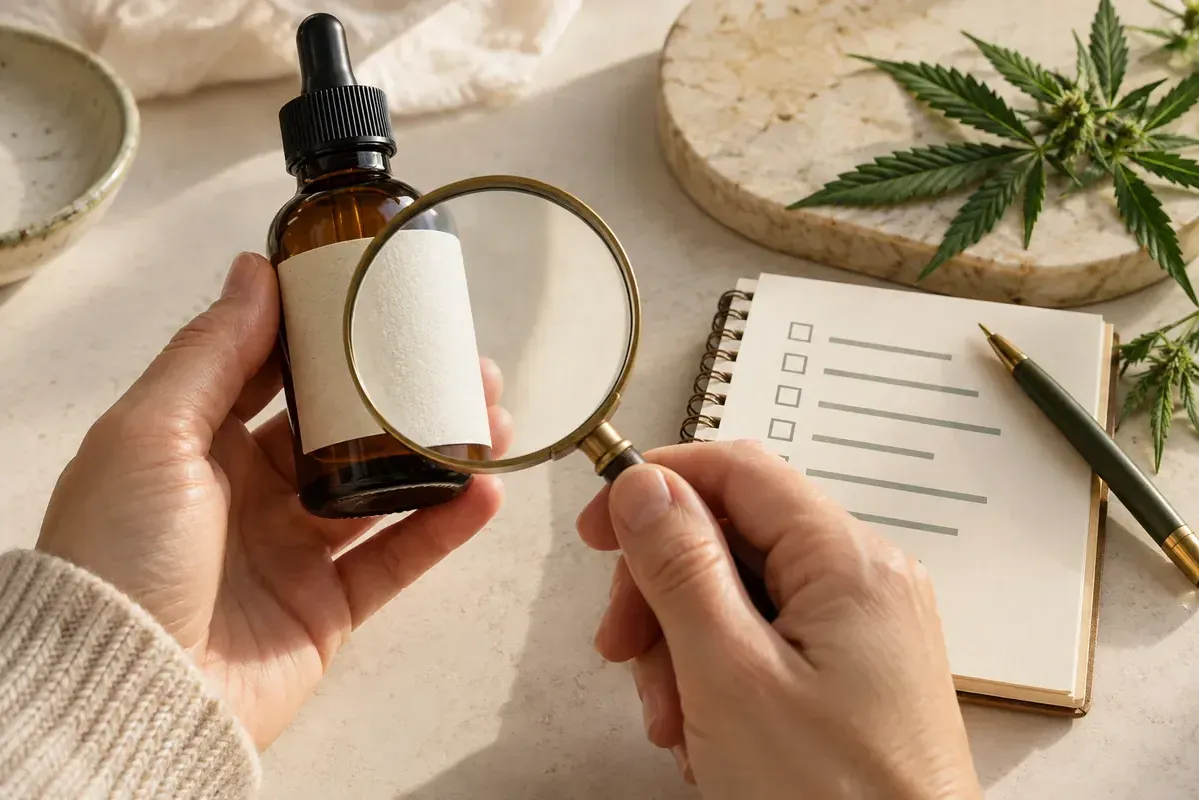
Illustration of reviewing product information; the checklist is not a real laboratory report.
Common mistakes to avoid
- Assuming CBD cannot cause side effects or interact with medication.
- Confusing CBD with THC, or forgetting that a CBD product may contain THC.
- Trusting label amounts without checking CBD and THC results in a lab report.
- Choosing by strength alone without considering format, quality and serving control.
- Ignoring differences in state law.
- Delaying diagnosis or treatment while using CBD.
Frequently asked questions
What is CBD in simple terms?
CBD is cannabidiol, a non-intoxicating compound found in cannabis plants. It is commonly extracted from hemp and used in oils, gummies, capsules, topicals, and cosmetics.
What does CBD do?
CBD interacts with the body's endocannabinoid system and other signaling pathways, but scientists are still studying how it works. People commonly use it in wellness routines, but retail CBD products are not proven cures.
Does CBD get you high?
CBD itself does not cause the high associated with THC. However, some CBD products, especially full spectrum products, may contain trace THC.
Is CBD safe for beginners?
CBD may be appropriate for some beginners, but it is not risk-free. Start low, choose lab-tested products, avoid risky claims, and ask a healthcare professional if you take medication or have health concerns.
What is the difference between CBD oil and gummies?
CBD oil offers flexible serving control with a dropper. Gummies are pre-measured, convenient, and easier to use discreetly, but they are less adjustable.
Is hemp derived CBD legal?
Hemp-derived CBD can be legal when it meets federal and state requirements, but legality depends on THC content, product type, FDA rules, and local law.
What are common CBD side effects?
Possible CBD side effects include drowsiness, digestive changes, appetite changes, mood changes, liver concerns, and drug interactions.
What CBD product should beginners choose?
Beginners often do best with a low-strength oil, gummy, or capsule from a transparent brand with third-party lab testing and clear CBD per serving.
Conclusion
When comparing a hemp-derived CBD product, find the amount per serving and check the spectrum and lab report for THC. Choose a brand that makes those details accessible, follow the applicable rules and watch for side effects. Discuss medication use or health concerns with a healthcare professional, and treat unsupported medical claims with caution.
Related CBD guides
Is CBD legal in the US?
Understand the federal, state and product-specific questions to check.
CBD oil vs gummies
Compare liquid and whole-piece formats, label amounts and practical differences.
How to choose CBD strength
Distinguish package totals, concentration and CBD per serving.