
Full Spectrum vs Broad Spectrum CBD
Updated
The spectrum label tells you which hemp compounds an extract retains. Full spectrum includes trace THC alongside CBD and other cannabinoids. Broad spectrum keeps many of those compounds but aims to remove THC. If THC exposure concerns you, this is one of the first label details to check.
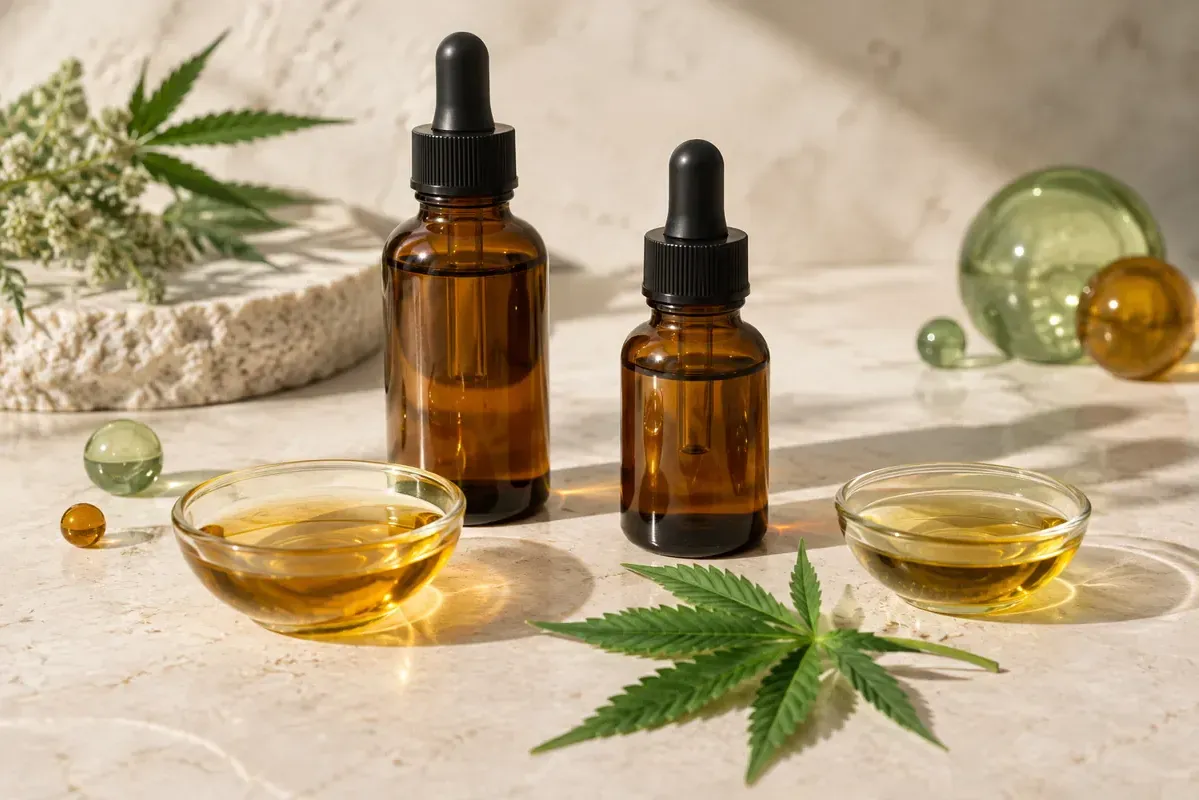
Conceptual comparison of hemp extracts; bottle appearance does not verify spectrum or THC content.
Quick answer / TL;DR
Full spectrum CBD contains CBD and a wider range of hemp compounds, including legally compliant trace THC when hemp-derived. Broad spectrum CBD contains CBD and other hemp compounds, but is typically processed to remove THC or reduce it to levels that are non-detectable by the lab method used.
| Best for | Full spectrum CBD | Broad spectrum CBD |
|---|---|---|
| Widest hemp profile | Yes | Nearly |
| Avoiding THC | No | Better fit |
| Entourage effect interest | Strongest fit | Good fit |
| THC-sensitive users | Use caution | Usually preferred |
| Drug testing concerns | Higher risk | Lower risk, not zero |
| Beginner comfort | Depends | Often easier |
| Flavor intensity | Often stronger | Often milder |
Full spectrum may suit you if you want the wider hemp extract and accept trace THC. Broad spectrum may suit you if you want cannabinoids and terpenes while avoiding intentional THC intake.
CBD types explained
CBD products usually fall into three extract categories:
- Full spectrum CBD: Contains CBD, minor cannabinoids, terpenes, flavonoids, and trace THC.
- Broad spectrum CBD: Contains CBD and other hemp compounds, with THC removed or non-detectable.
- CBD isolate: Contains CBD only, without the broader hemp profile.
For CBD alone, there is also isolate. The CBD isolate vs full spectrum comparison explains what processing removes. Broad spectrum sits between those two extracts.
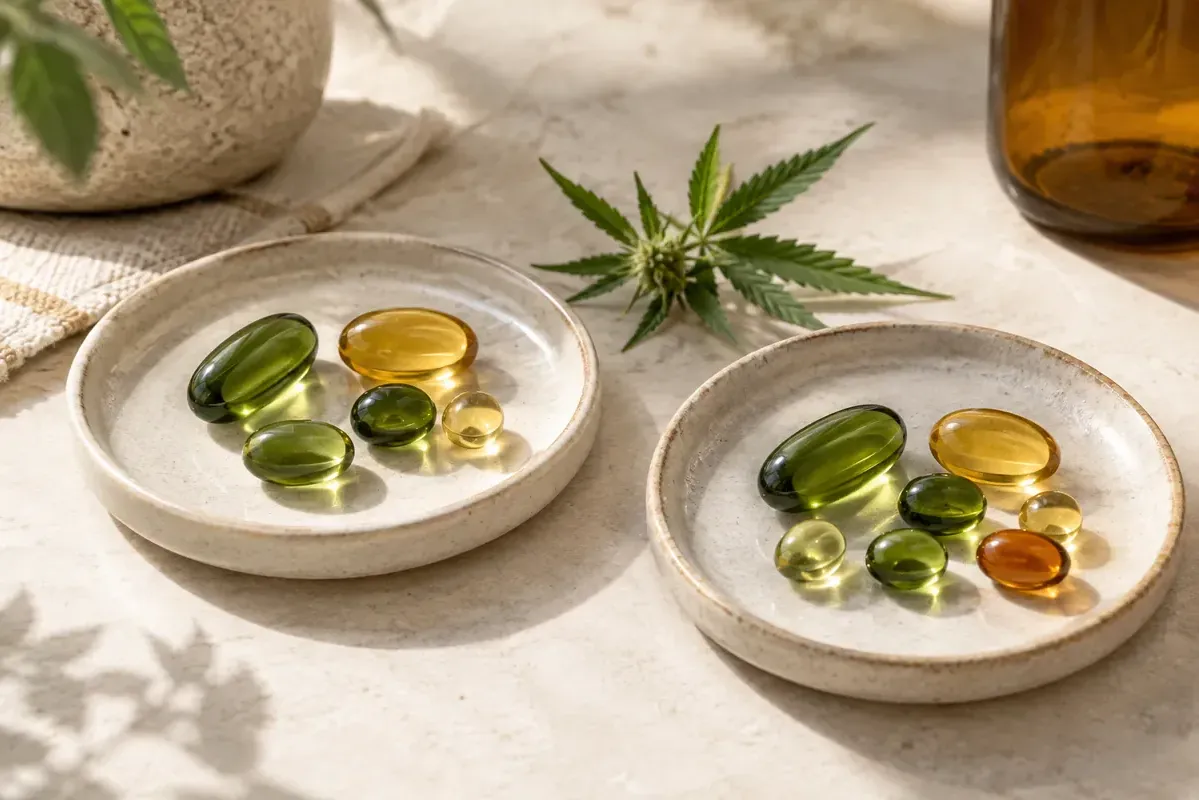
Conceptual compound profiles. Beads represent variety, not measured cannabinoids or concentrations.
What is full spectrum CBD?
Full spectrum CBD is a hemp extract designed to preserve the plant's natural range of compounds. These may include CBD, small amounts of THC, cannabigerol (CBG), cannabinol (CBN), cannabichromene (CBC), terpenes, fatty acids, and flavonoids.
The general federal definition of hemp in the United States sets a limit of 0.3% delta-9 THC by dry weight. A product marketed as hemp-derived may therefore still contain trace THC, subject to the product type and applicable laws.
Full spectrum CBD benefits
- More complete hemp extract
- Includes CBD with THC and minor cannabinoids
- Better fit for users interested in the CBD entourage effect
- Often available in oils, gummies, capsules, and topicals
- May feel more noticeable to some users because of the wider mix of compounds
Trace THC still needs attention if you are sensitive to it, face drug testing or want to avoid psychoactive cannabinoids. Pregnancy, breastfeeding and medication use also warrant caution.
What is broad spectrum CBD?
Broad spectrum retains many hemp compounds while processing removes THC or reduces it below the lab's detection limit. You will often see it marketed as "THC free." Check the certificate of analysis to see what that claim means for the batch you are buying.
Broad spectrum CBD benefits
Reasons shoppers choose broad spectrum include:
- Contains CBD plus minor cannabinoids and terpenes
- Avoids intentional THC intake
- Better fit for THC-sensitive consumers
- Often easier for beginners to feel comfortable with
- Useful for daytime wellness routines where THC avoidance matters
Testing limits, manufacturing quality and batch consistency all affect a "THC free" claim. Mislabeled or contaminated broad spectrum products can still expose you to THC.
Full spectrum vs broad spectrum: key differences
| Factor | Full spectrum CBD | Broad spectrum CBD |
|---|---|---|
| THC content | Contains trace THC | THC removed or non-detectable |
| Hemp profile | Widest | Broad, but modified |
| Entourage effect potential | Highest | Moderate to high |
| Drug test risk | Higher | Lower, not zero |
| Best for | Users comfortable with trace THC | Users avoiding THC |
| Flavor | More hemp-forward | Often cleaner or milder |
| Label priority | THC amount and cannabinoid profile | Non-detect THC and test method |
Whether you accept THC exposure helps determine which of these differences matters most to you.
What is the CBD entourage effect?
The CBD entourage effect is the theory that cannabinoids and terpenes may work better together than isolated compounds. People often use the phrase to explain why full spectrum CBD may feel different from CBD isolate, even when the CBD milligrams are similar.
Full spectrum retains the wider mix of compounds, including trace THC. Broad spectrum also contains multiple hemp compounds, with less THC exposure.
The entourage effect remains a theory rather than a promised result from a particular product. Quality, dosage, body chemistry and delivery format affect the experience, as does consistency. A full spectrum gummy is not automatically more effective than a well-made broad spectrum oil.
THC content: what the label should tell you
Check how much THC the product contains. Some brands make this clear on the label; others leave you to find it in the lab report.
Look for a recent third-party lab report showing:
- Total CBD per serving and per package
- Delta-9 THC level
- Total THC, where available
- Minor cannabinoids such as CBG, CBN, or CBC
- Terpenes, if the brand claims terpene content
- Screening for pesticides, heavy metals, microbes, residual solvents, and mycotoxins
- Batch number matching the product package
CDC notes that CBD is not impairing, but CBD products are not risk-free, and some products labeled as hemp or CBD may contain other ingredients, including THC or contaminants. CDC
Which CBD spectrum is best?
| Your priority | Better fit | Why |
|---|---|---|
| Avoid THC as much as possible | Broad spectrum | Keeps a wider hemp profile without intentional THC |
| Explore the widest hemp extract | Full spectrum | Includes trace THC plus other plant compounds |
| Workplace drug testing | Broad spectrum or isolate | Full spectrum carries more THC risk |
| THC sensitivity | Broad spectrum | Lower chance of unwanted THC effects |
| Maximum simplicity | Isolate | CBD only, fewer spectrum variables |
| Hemp-forward experience | Full spectrum | Closest to whole-plant extract |
| Beginner confidence | Broad spectrum | Easier starting point for THC-cautious users |
If you are unsure, broad spectrum is usually the more conservative first choice. You can still access cannabinoids and terpenes while reducing THC exposure.
Safety and real-world considerations
CBD can cause side effects such as drowsiness, appetite changes, diarrhea, mood changes, and possible drug interactions. The FDA has approved one prescription CBD drug for specific seizure disorders, but most retail CBD products have not been FDA-approved for medical use, dosage, safety, or disease claims. FDA
Use extra caution if you:
- Take prescription medication
- Have liver concerns
- Are pregnant, breastfeeding, or trying to conceive
- Must pass THC drug testing
- Have had unpleasant reactions to THC
- Are buying gummies or edibles that could be mistaken for candy
NIH's NCCIH advises people not to use cannabis or cannabinoids to postpone medical care and to discuss complementary health approaches with healthcare providers. NCCIH
Buyer checklist: how to compare hemp extracts
Use this checklist before buying full spectrum or broad spectrum CBD:
- Confirm the spectrum from the label and testing, not just the product name.
- Match the lab report's batch number to the package.
- Look for delta-9 THC, total THC and any "non-detect" result.
- Compare CBD per serving instead of judging by bottle size.
- Check CBG, CBN and CBC when comparing formulas.
- Read the ingredients for added sugar, allergens, melatonin, herbs and artificial colors.
- Divide price by total CBD milligrams to compare value.
- Be wary of strong medical promises or claims to cure disease.
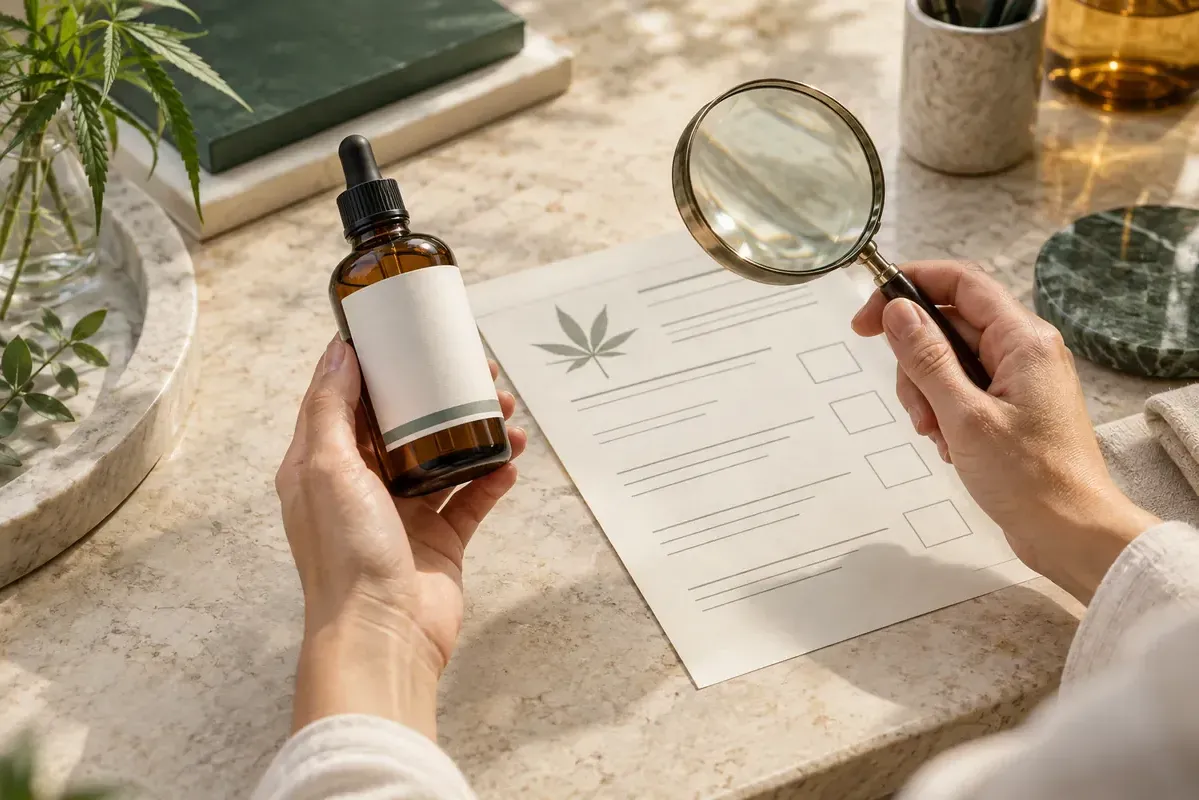
Illustration of checking batch information; the document is not a real certificate of analysis.
Common mistakes to avoid
- Assuming broad spectrum always means zero THC without reading the lab result.
- Checking delta-9 THC while ignoring total THC.
- Buying full spectrum before considering workplace drug testing.
- Confusing hemp seed oil with CBD oil; hemp seed oil may contain no meaningful CBD.
- Judging value by price alone without CBD amounts and lab data.
- Expecting oils, gummies, capsules and topicals to feel the same in use.
Frequently asked questions
Is full spectrum CBD better than broad spectrum CBD?
Full spectrum CBD is a better fit if you want the widest hemp profile and are comfortable with trace THC. Broad spectrum CBD is a better fit if you want cannabinoids and terpenes while avoiding intentional THC intake.
Does broad spectrum CBD contain THC?
Broad spectrum CBD is typically processed to remove THC or make it non-detectable by lab testing. Always check the certificate of analysis because "THC free" depends on batch quality and testing limits.
Can full spectrum CBD get you high?
CBD itself is not impairing, but full spectrum CBD can contain trace THC. A compliant hemp product should not feel like a high-THC cannabis product, but sensitive users may still prefer broad spectrum or isolate.
Will full spectrum CBD show up on a drug test?
It can. Full spectrum products contain trace THC, and repeated use may increase risk. If drug testing matters, broad spectrum or isolate is a safer direction, but no retail CBD product can guarantee a pass.
What is the difference between broad spectrum CBD and CBD isolate?
Broad spectrum CBD contains CBD plus other hemp compounds, usually without detectable THC. CBD isolate contains CBD only and does not preserve the wider cannabinoid and terpene profile.
Which CBD spectrum is best for beginners?
Broad spectrum CBD is often the best starting point for beginners who are THC-cautious. Full spectrum may be appropriate for users who understand trace THC and are comfortable reading lab reports.
Are cannabinoids and terpenes important?
They can be. Cannabinoids and terpenes contribute to a product's hemp profile, flavor, aroma, and potential effects. They matter most when comparing full spectrum, broad spectrum, and isolate products.
Is THC free CBD always safer?
Not automatically. THC free CBD may reduce THC exposure, but quality still depends on accurate labeling, clean ingredients, contaminant testing, and responsible use.
Conclusion
Use your tolerance for THC exposure to narrow the choice, then compare the actual lab results. Full spectrum retains more of the plant profile; broad spectrum aims to keep many cannabinoids and terpenes with less THC. Clear labeling, recent tests and realistic claims matter for either extract.
Related CBD guides
CBD isolate vs full spectrum
Compare CBD isolate with extracts containing a wider hemp profile.
Is CBD legal in the US?
Understand the federal, state and product-specific questions to check.
How to choose CBD strength
Distinguish package totals, concentration and CBD per serving.